|
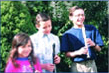  The recorder is a nifty little musical instrument. This predecessor of
the flute has been around for hundreds of years. The modern plastic version is inexpensive (available in music stores for around $5-$30) and easy to care for. My favorite recorder is the Aulos recorder.
Soprano recorders are about a foot long; the finger holes are comfortably spaced--even for children. The recorder is a nifty little musical instrument. This predecessor of
the flute has been around for hundreds of years. The modern plastic version is inexpensive (available in music stores for around $5-$30) and easy to care for. My favorite recorder is the Aulos recorder.
Soprano recorders are about a foot long; the finger holes are comfortably spaced--even for children.
 |
Maria Augusta Trapp, of Sound of Music fame, wrote in her inspiring family oriented book The Story of the Trapp Family Singers: "...The recorder is the ideal
instrument for any adult whose childhood musical education has been neglected. If someone discovers on his fiftieth birthday that he should have taken piano or violin
lessons while in school, he will hardly want to start then, for fear of not getting very far; but he will always miss it--to be able to 'make music' himself. That's where the recorder
comes in handy. After six weeks of faithful practicing, even the oldest pupil can play folk tunes very nicely...There are untold riches in that little  instrument." instrument."
Some people wonder about the pros and cons of piano vs. recorder. Both instruments are great to learn. There will be no confusion because the recorder and the piano are
so different but both reinforce the same music reading skills. Children enjoy the opportunity to learn a wind instrument as well as the piano. (One advantage of the
recorder is that it is much easier to carry around or take on a trip.) 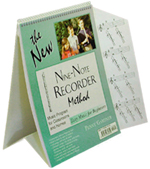 For those who don't own a piano, the recorder is an affordable alternative. Lessons are optional. Most children are ready for the recorder around age eight to ten, perhaps
earlier if they have a strong desire for music. And as Maria Trapp said, it's never too late to learn. So this is an ideal instrument for adults as well as children.
Much of the music written for recorder quickly becomes too difficult for children and for adults with no background in reading music. 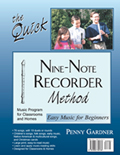
The New Nine-Note Recorder Method and the new Quick Nine-Note Recorder Method use only the nine easiest notes to play and simple
rhythms. Not only is the music easy, it is mostly duets and trios. Folk songs, multicultural songs, classic melodies, and Christmas carols are waiting for your family to experience together. You may also purchase and
play these supplemental volumes using only the nine easiest notes:
Christmas Duets for Recorders,
Easy Duets for Christians,
Easy Duets for Catholics, or
Easy Duets for Latter-day Saints. What fun ways for the family to make music!
Bring "untold riches" to your family by purchasing soprano recorders for everyone and these
|
fun books of two- and three-part songs. Soon your family will be making beautiful music together wherever you are. |